


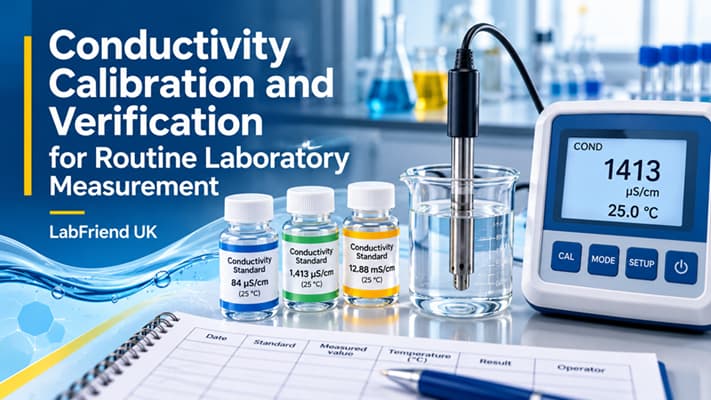
28 mins read
Conductivity Calibration and Verification for Routine Laboratory Measurement
Conductivity Calibration and Verification for Routine Laboratory Measurement
Ø
Specifications
Compare models£54.33
Inc. VAT
The Retsch 20 mm Sintered Corundum Grinding Balls are essential accessories for achieving fine particle size reduction in laboratory sample preparation. Made from high-quality sintered corundum (aluminum oxide), these grinding balls offer exceptional hardness and wear resistance, making them suitable for processing hard, abrasive materials. Their 20 mm diameter is ideal for homogenizing and pulverizing samples in various ball mills, including Retsch's Mixer Mill MM 400 and Planetary Ball Mill PM 100. The pack contains an appropriate quantity of grinding balls, ensuring ample supply for multiple applications.
Enhance your laboratory's milling efficiency with Retsch's 20 mm Sintered Corundum Grinding Balls, designed to deliver consistent and reliable results across a wide range of sample materials.
It are essential accessories for achieving fine particle size reduction in laboratory sample preparation. Made from high-quality sintered corundum (aluminum oxide), these grinding balls offer exceptional hardness and wear resistance, making them suitable for processing hard, abrasive materials. Their 20 mm diameter is ideal for homogenizing and pulverizing samples in various ball mills, including Retsch's Mixer Mill MM 400 and Planetary Ball Mill PM 100. The pack contains an appropriate quantity of grinding balls, ensuring ample supply for multiple applications.
Yes. It is designed for Effective for pulverizing hard, abrasive materials in various scientific fields, and offers a diameter of 20 mm, suitable for fine grinding and homogenization to support this kind of work.
It has a diameter of 20 mm, suitable for fine grinding and homogenization.
It is made from high-quality sintered corundum (aluminum oxide) for enhanced durability and minimal contamination. It is compatible with ideal for use with Retsch ball mills, such as the Mixer Mill MM 400 and Planetary Ball Mill PM 100.

Manufacturer P/N
053680054
Part Number
9.738 385
Manufacturer
Retsch
Ø
20 mm

Manufacturer P/N
053680112
Part Number
4.676 463
Manufacturer
Retsch
Ø
15 mm

Manufacturer P/N
053680021
Part Number
9.738 380
Manufacturer
Retsch
Ø
10 mm

Manufacturer P/N
053680022
Part Number
9.738 853
Manufacturer
Retsch
Ø
12 mm

Manufacturer P/N
053680052
Part Number
9.738 395
Manufacturer
Retsch
Ø
40 mm

Manufacturer P/N
053680020
Part Number
9.738 851
Manufacturer
Retsch
Ø
7 mm

Manufacturer P/N
053680053
Part Number
9.738 390
Manufacturer
Retsch
Ø
30 mm

Manufacturer P/N
053680019
Part Number
9.738 850
Manufacturer
Retsch
Ø
5 mm
Grinding balls, tungsten carbide
Grinding balls, zirconium oxide
It are essential accessories for achieving fine particle size reduction in laboratory sample preparation. Made from high-quality sintered corundum (aluminum oxide), these grinding balls offer exceptional hardness and wear resistance, making them suitable for processing hard, abrasive materials. Their 20 mm diameter is ideal for homogenizing and pulverizing samples in various ball mills, including Retsch's Mixer Mill MM 400 and Planetary Ball Mill PM 100. The pack contains an appropriate quantity of grinding balls, ensuring ample supply for multiple applications.
Yes. It is designed for Effective for pulverizing hard, abrasive materials in various scientific fields, and offers a diameter of 20 mm, suitable for fine grinding and homogenization to support this kind of work.
It has a diameter of 20 mm, suitable for fine grinding and homogenization.
It is made from high-quality sintered corundum (aluminum oxide) for enhanced durability and minimal contamination. It is compatible with ideal for use with Retsch ball mills, such as the Mixer Mill MM 400 and Planetary Ball Mill PM 100.
28 mins read
Conductivity Calibration and Verification for Routine Laboratory Measurement
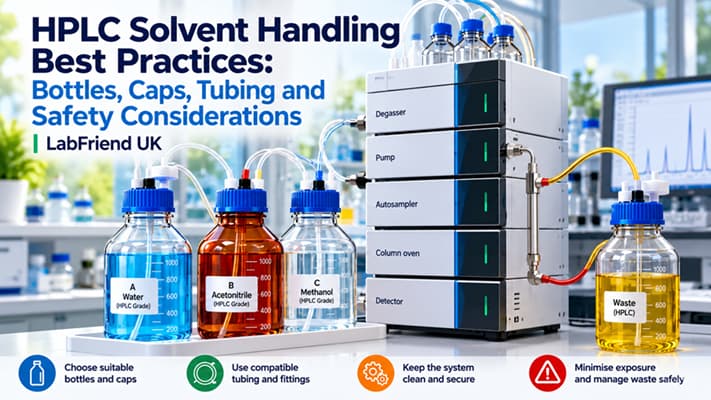
22 mins read
HPLC Solvent Handling Best Practices: Bottles, Caps, Tubing and Safety Considerations

21 mins read
Certified and Pre-Cleaned Bottles for Procurement Teams - What the Certificate Must Confirm

23 mins read
How UK Laboratories Reduce Pipette Tip Consumables Costs Without Increasing Workflow Risk
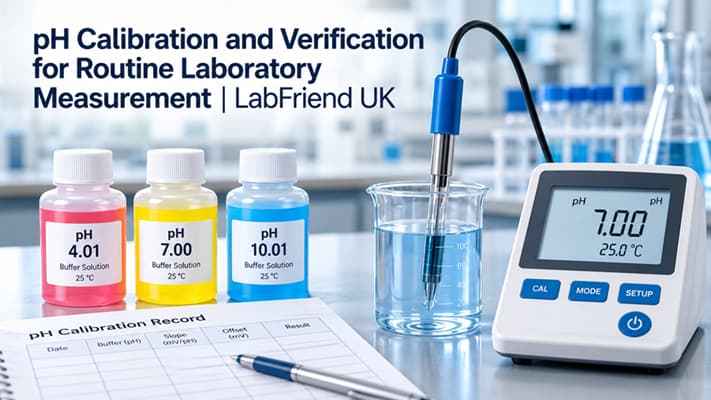
29 mins read
pH Calibration and Verification for Routine Laboratory Measurement