

Share :
The Ultimate Guide to Laboratory Filtration for UK Laboratories
Updated On 05/19/2026

By Donal O’Sullivan, BSc. Reviewed by Michael Anderson, MBA.
Reliable Filtration Starts with the Right Selection
Laboratory filtration is one of the most widely used — and most underestimated — process steps in analytical chemistry, life sciences, microbiology, environmental testing, food analysis, and pharmaceutical laboratories.
Choosing the correct filtration setup affects:
- sample integrity
- analytical accuracy
- instrument protection
- sterility
- operational efficiency
- and ultimately laboratory cost control
Whether you are preparing HPLC samples, sterilising media, removing particulates, filtering solvents, or protecting sensitive instrumentation, selecting the correct membrane, pore size, filter diameter, and filtration format is critical.
This guide explains:
- the main types of laboratory filtration
- membrane chemistry selection
- pore size selection
- filter diameter selection
- workflow-specific filtration choices
- and common mistakes laboratories should avoid
It is designed for:
- scientists
- laboratory managers
- analytical chemists
- procurement personnel
- and operational laboratory teams across UK laboratories
Reliable. Precise. Delivered.
What Is Laboratory Filtration?
Laboratory filtration is the process of separating suspended particulates or microorganisms from liquids using a porous filtration medium.
Filtration is commonly used to:
- clarify samples
- perform sterilising-grade filtration
- prepare analytical samples
- remove particulates before chromatography
- recover solids
- and protect instruments from contamination or blockage
It is important to distinguish between clarification filtration and sterilising-grade filtration.
Clarification filtration is primarily used to remove particulates and suspended matter from samples.
Sterilising-grade filtration is intended to retain most bacteria under validated conditions, typically using 0.22 µm membranes.
In modern laboratories, filtration is often a routine but mission-critical step embedded into:
- SOPs
- sample preparation methods
- sterility procedures
- and analytical quality systems
The Main Types of Laboratory Filtration
Different laboratory applications require different filtration approaches.
Syringe Filtration
Syringe filters are one of the most common filtration formats used in laboratories.
Typical applications include:
- HPLC sample preparation
- UHPLC sample clarification
- protein sample preparation
- solvent filtration
- microbiology sample preparation
Syringe filtration is ideal for:
- low sample volumes
- rapid filtration
- individual sample preparation
- analytical procedures
Typical syringe filter membranes include:
- PTFE
- PES
- Regenerated Cellulose (RC)
- Nylon
- PVDF
- Cellulose Acetate (CA)
Samples with high particulate loads may require prefiltration before final membrane filtration to reduce membrane fouling and improve throughput.
Bottle-Top Filtration
Bottle-top filtration units are commonly used for:
- sterile media preparation
- buffer sterilisation
- cell culture procedures
- larger sample volumes
They are widely used in:
- biotech laboratories
- life science research
- microbiology
- pharmaceutical preparation environments
Bottle-top filtration is commonly used when sterile processing of larger liquid volumes is required with minimal handling steps.
Vacuum Filtration
Vacuum filtration uses reduced pressure to accelerate filtration speed.
Common applications include:
- microbiological analysis
- particulate recovery
- environmental testing
- gravimetric analysis
- membrane filtration procedures
Vacuum filtration systems commonly include:
- vacuum pumps
- filtration manifolds
- filter flasks
- membrane holders
- filtration funnels
For samples containing high particulate loads, prefiltration stages are often used to improve filtration efficiency and extend membrane life.
Filter Paper Filtration
Filter paper remains widely used in:
- educational laboratories
- environmental testing
- food analysis
- routine QC laboratories
- industrial facilities
Applications include:
- precipitate separation
- qualitative filtration
- quantitative analysis
- clarification
Different grades affect:
- retention
- filtration speed
- ash content
- analytical suitability
Retention ratings may be nominal or absolute depending on filter construction. Critical procedures such as sterilising filtration typically require validated absolute-rated membranes.
Gas Filtration Applications
Gas filtration is used in some laboratory and bioprocessing environments to remove particulates or microorganisms from air and gases.
Typical applications include:
- sterile vent filtration
- vacuum line protection
- bioreactor gas exchange
- compressed gas filtration
Hydrophobic membranes such as PTFE are commonly used in gas filtration applications.
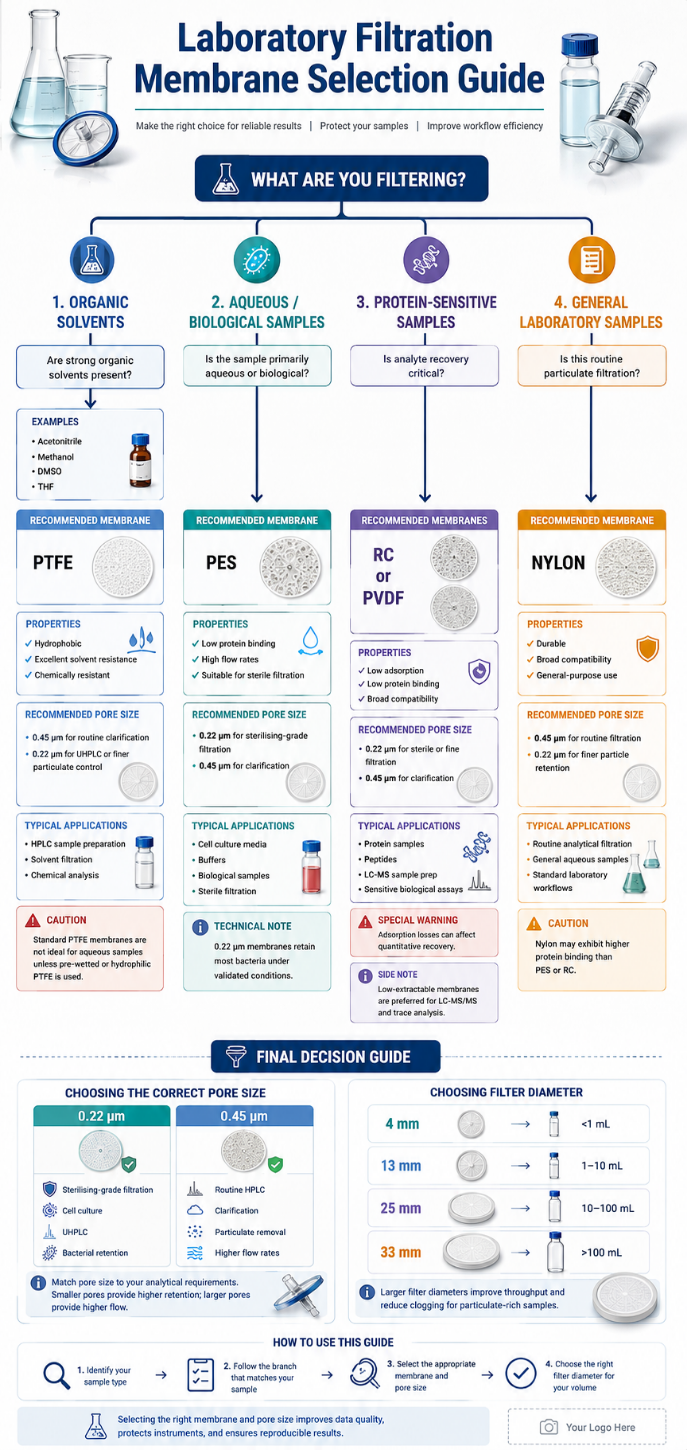
Choosing the Correct Filter Membrane
Membrane selection is one of the most important filtration decisions.
The wrong membrane can lead to:
- sample loss
- membrane degradation
- extractables
- poor recovery
- low flow rates
- inaccurate analytical results
The correct membrane depends on:
- sample chemistry
- solvent compatibility
- protein binding characteristics
- hydrophilic vs hydrophobic behaviour
- analytical requirements
Some analytes may adsorb onto membrane surfaces, potentially affecting quantitative recovery. This is particularly important for proteins, peptides, hydrophobic analytes, and trace-level analytical methods.
Always verify membrane compatibility using manufacturer chemical compatibility charts before use.
Membrane Comparison Table
|
Membrane |
Hydrophilic/Hydrophobic |
Protein Binding |
Solvent Compatibility |
Typical Applications |
|
PTFE |
Hydrophobic (hydrophilic variants available) |
Low |
Excellent |
Organic solvents, aggressive chemicals, LC sample preparation |
|
PES |
Hydrophilic |
Low |
Moderate to broad |
Biological samples, sterile filtration, aqueous solutions |
|
Regenerated Cellulose (RC) |
Hydrophilic |
Very low |
Broad |
HPLC/UHPLC, mixed aqueous-organic samples, protein-sensitive applications |
|
Nylon |
Hydrophilic |
Moderate to high |
Broad |
General laboratory filtration, routine analytical use |
|
PVDF |
Hydrophobic or hydrophilic variants |
Low |
Broad |
Protein samples, biological filtration, low-binding applications |
|
Cellulose Acetate (CA) |
Hydrophilic |
Low |
Limited to moderate |
Sterile aqueous filtration, biological media and buffers |
PTFE Membranes
PTFE (Polytetrafluoroethylene) membranes are highly resistant to aggressive solvents and chemicals.
They are commonly used for:
- organic solvents
- HPLC sample preparation
- aggressive chemical filtration
- non-aqueous samples
PTFE membranes are typically:
- hydrophobic
- chemically resistant
- suitable for solvent-heavy applications
Standard PTFE membranes are hydrophobic and are primarily suited to organic solvents. Aqueous samples may require hydrophilic PTFE membranes or pre-wetting.
Common applications include:
- acetonitrile
- methanol
- DMSO
- THF
- strong solvent filtration
PES Membranes
PES (Polyethersulfone) membranes are widely used for aqueous and biological samples.
Advantages include:
- low protein binding
- high flow rates
- suitability for aqueous sterile filtration
- excellent throughput
PES membranes are commonly used for:
- biological samples
- cell culture media
- sterilising-grade filtration
- aqueous HPLC samples
Regenerated Cellulose (RC) Membranes
Regenerated Cellulose membranes are often considered one of the most versatile membrane choices for analytical laboratories.
RC membranes combine:
- broad solvent compatibility
- hydrophilic behaviour
- low protein binding
- typically low extractables
They are particularly useful for:
- HPLC sample preparation
- mixed aqueous/organic samples
- protein-sensitive applications
- analytical laboratories handling varied sample types
Read more about RC see Why Regenerated Cellulose (RC) Membranes are The Universal Standard for Lab Filtration | LabFriend UK
Nylon Membranes
Nylon membranes are durable and compatible with many aqueous and organic applications.
Typical uses include:
- general laboratory filtration
- aqueous sample filtration
- solvent filtration
- routine analytical procedures
However, nylon membranes may exhibit relatively high nonspecific protein binding and may not be suitable for some aggressive solvents.
PVDF Membranes
PVDF membranes offer:
- low protein binding
- broad chemical compatibility
- excellent biological performance
Commonly used for:
- protein samples
- biological filtration
- sterilising-grade procedures
- sensitive analytical applications
Understanding Filter Pore Size
Pore size determines what particles or microorganisms are retained during filtration.
The two most common laboratory filtration pore sizes are:
- 22 µm
- 45 µm
Pore size selection should also consider:
- membrane chemistry
- sample viscosity
- analyte recovery requirements
- particulate load
- and throughput requirements
0.22 µm Filters
0.22 µm filters are commonly used for:
- sterilising-grade filtration
- retention of most bacteria under validated conditions
- microbiology
- cell culture preparation
- sterile buffers
These filters are widely used when sterility is critical.
Some specialised applications, such as mycoplasma-sensitive procedures, may require smaller pore sizes such as 0.1 µm.
0.45 µm Filters
0.45 µm filters are commonly used for:
- sample clarification
- particulate removal
- routine HPLC sample preparation
- analytical filtration
They are often preferred when:
- sterility is not required
- higher flow rates are desirable
- larger particulates are being removed
For UHPLC procedures using sub-2 µm particle columns, 0.2 µm or 0.22 µm filtration is often preferred to minimise particulate-related backpressure and column fouling.
Choosing the Correct Filter Diameter
Filter diameter affects:
- sample throughput
- membrane loading capacity
- filtration speed
- and risk of clogging
Common syringe filter diameters include:
|
Filter Diameter |
Typical Sample Volume |
Common Applications |
|
4 mm |
<1 mL |
Small-volume or autosampler vial preparation |
|
13 mm |
1–10 mL |
Routine analytical sample preparation |
|
25 mm |
10–100 mL |
Higher particulate loads or larger sample volumes |
|
33 mm |
>100 mL |
High-throughput or heavily particulate samples |
Using an undersized filter for particulate-rich samples may result in:
- premature clogging
- slow filtration
- incomplete sample recovery
- excessive syringe pressure
Larger membrane surface areas generally improve throughput and reduce fouling risk for difficult samples.
Choosing Between 0.22 µm and 0.45 µm
As a general rule:
|
Application |
Typical Pore Size |
|
Sterilising-grade filtration |
0.22 µm |
|
Routine HPLC clarification |
0.45 µm |
|
UHPLC sample preparation |
0.22 µm |
|
Cell culture media |
0.22 µm |
|
Routine particulate removal |
0.45 µm |
Application requirements should always determine final selection.
Extractables and Leachables in Analytical Filtration
In sensitive analytical methods, membrane-derived extractables and leachables can interfere with analytical results.
This is particularly important in:
- LC-MS/MS
- trace organic analysis
- pharmaceutical QC
- PFAS analysis
- environmental testing
- ultra-trace contaminant monitoring
Potential issues include:
- background peaks
- ion suppression or enhancement
- elevated baselines
- ghost peaks
- contamination of low-level analytes
Low-extractable membrane materials such as regenerated cellulose (RC) or validated LC-MS-certified filtration products are often preferred for high-sensitivity analytical methods.
Where analytical sensitivity is critical, laboratories should evaluate filtration materials during method development and verify compatibility with the analytical technique and target analytes.
Common Laboratory Filtration Applications
HPLC Sample Preparation
Proper filtration helps:
- protect columns
- reduce particulate contamination
- improve reproducibility
- reduce system downtime
Membranes commonly used include:
- PTFE
- RC
- PES
Cell Culture and Sterile Procedures
Sterilising-grade filtration is essential for:
- media preparation
- buffer sterilisation
- biological procedures
Common membranes include:
- PES
- PVDF
- CA
Environmental Testing
Environmental laboratories frequently use filtration for:
- particulate analysis
- water testing
- microbiological monitoring
- gravimetric procedures
Protein and Biological Samples
Low protein binding membranes are important to minimise:
- analyte loss
- adsorption
- recovery issues
Preferred membranes often include:
- RC
- PES
- PVDF
Common Laboratory Filtration Mistakes
Using the Wrong Membrane Chemistry
A membrane incompatible with the sample chemistry may:
- dissolve
- crack
- contaminate samples
- reduce recovery
Choosing an Incorrect Pore Size
Using:
- 45 µm instead of 0.22 µm in sterilising procedures
- or overly restrictive filtration unnecessarily
can negatively affect:
- sterility
- throughput
- recovery
- filtration time
Ignoring Protein Binding and Adsorption
Protein-sensitive samples may suffer analyte loss if high-binding membranes are used.
Adsorption effects can also impact recovery of hydrophobic compounds and trace analytes.
Not Filtering HPLC Samples Properly
Insufficient sample filtration can lead to:
- blocked columns
- increased pressure
- poor chromatographic performance
- costly downtime
How Laboratories Should Select Filtration Products
When choosing filtration products, laboratories should evaluate:
Sample Chemistry
- aqueous
- organic
- mixed solvent systems
Analytical Requirements
- sterility
- particulate removal
- recovery sensitivity
Sample Volume and Throughput
- syringe filtration
- bottle-top filtration
- vacuum filtration
- expected particulate loading
- required filtration speed
Membrane Compatibility
- solvent resistance
- protein binding
- extractables profile
Operational Reliability
Laboratories increasingly prioritise:
- stock availability
- consistent supply
- reproducibility
- dependable delivery
This is particularly important for laboratories with recurring consumables demand and standardised procedures.
Building Reliable Filtration Procedures
Reliable filtration procedures reduce:
- analytical variability
- operational interruptions
- instrument damage
- procurement inefficiencies
For many laboratories, filtration consumables become:
- repeat-order items
- SOP-defined products
- operationally critical consumables
Selecting the correct filtration products from the outset improves:
- consistency
- efficiency
- and long-term laboratory productivity
Frequently Asked Questions About Laboratory Filtration
What is the difference between 0.22 µm and 0.45 µm filters?
0.22 µm filters are typically used for sterilising-grade filtration and retention of most bacteria under validated conditions, while 0.45 µm filters are more commonly used for particulate removal and routine sample clarification where sterility is not required.
Which syringe filter membrane is best for HPLC sample preparation?
The best membrane depends on the sample chemistry and analytical method. PTFE, regenerated cellulose (RC), and PES membranes are commonly used for HPLC and UHPLC sample preparation due to their chemical compatibility and low extractables.
Which filter membrane should be used for organic solvents?
PTFE membranes are widely used for aggressive organic solvents such as acetonitrile, methanol, DMSO, and THF because of their excellent chemical resistance.
Are regenerated cellulose (RC) membranes suitable for aqueous and organic samples?
Yes. Regenerated cellulose membranes are commonly selected for mixed aqueous-organic samples because they combine hydrophilic behaviour, low protein binding, broad solvent compatibility, and low extractables.
What causes syringe filters to clog quickly?
Rapid clogging is often caused by high particulate loads, using undersized filter diameters, highly viscous samples, or inadequate prefiltration. Using larger filter diameters or introducing a prefiltration step can improve throughput and membrane life.
What is low protein binding in laboratory filtration?
Low protein binding refers to a membrane's reduced tendency to adsorb proteins or biomolecules onto its surface. This helps improve analyte recovery and reduces sample loss in biological and protein-sensitive applications.
Why is filtration important before HPLC or UHPLC analysis?
Filtration helps remove particulates that may block columns, increase system backpressure, damage injector components, and reduce chromatographic performance. Proper filtration improves reproducibility and helps extend instrument life.
Can PTFE membranes be used with aqueous samples?
Standard PTFE membranes are hydrophobic and are primarily designed for organic solvents and gases. Aqueous samples may require hydrophilic PTFE membranes or pre-wetting before use.
What filter diameter should be used for syringe filtration?
Filter diameter selection depends on sample volume and particulate load. As a general guide:
- 4 mm filters are suitable for very small volumes
- 13 mm filters are common for routine analytical work
- 25 mm and 33 mm filters are preferred for larger volumes or particulate-rich samples
What are extractables and leachables in membrane filtration?
Extractables and leachables are compounds that may migrate from the membrane or housing materials into the sample. In sensitive analytical techniques such as LC-MS/MS or trace analysis, these compounds can interfere with analytical results.
Which membranes are commonly used for sterile filtration?
PES, PVDF, and Cellulose Acetate membranes are commonly used for sterilising-grade filtration of aqueous solutions, media, and biological samples.
Why do laboratories standardise filtration consumables?
Laboratories often standardise filtration products to improve workflow consistency, analytical reproducibility, procurement efficiency, staff training, and stock management. Reliable supply and consistent product performance are especially important for laboratories with recurring consumables demand.
Explore Laboratory Filtration Products at LabFriend UK
LabFriend UK supplies a broad range of laboratory filtration products suitable for:
- analytical chemistry
- HPLC sample preparation
- sterilising-grade filtration
- biotechnology
- environmental testing
- life science laboratories
Explore:
- syringe filters
- membrane filters
- bottle-top filtration
- filter paper
- vacuum filtration products
- and laboratory filtration consumables
Read More Laboratory Filtration Insights
Explore related articles covering laboratory filtration selection, applications, membranes, workflows, and analytical best practices
Written by: Donal O’Sullivan, BSc, Co-Founder and Sales Director, LabFriend UK. Donal brings deep chemistry-led technical expertise across analytical chemistry, biochemistry, environmental monitoring, laboratory instrumentation, consumables and scientific product selection.
Reviewed by: Michael Anderson, MBA, Founder and Managing Director, LabFriend UK. Michael reviews LabFriend UK content for customer relevance, commercial accuracy, operational practicality and alignment with LabFriend UK’s laboratory supply model.
Related Stories

Extractables and Leachables in Analytical Filtration Explained
Extractables and Leachables in Analytical Filtration Explained

How Lab Managers Can Standardise Centrifuge Tube Purchasing Without Increasing Technical Risk
How Lab Managers Can Standardise Centrifuge Tube Purchasing Without Increasing Technical Risk

Low Protein Binding Membranes Explained for Laboratory Filtration
Low Protein Binding Membranes Explained for Laboratory Filtration

Choosing Tube Racks for 15mL and 50mL Centrifuge Tubes
Choosing Tube Racks for 15mL and 50mL Centrifuge Tubes