Laboratory pH, Conductivity and Dissolved Oxygen Measurement: Choosing the Right Approach
27 mins read
Laboratory pH, Conductivity and Dissolved Oxygen Measurement: Choosing the Right Approach
By Donal O’Sullivan, BSc. Reviewed by Michael Anderson, MBA.
Choosing between pH, conductivity and dissolved oxygen
measurement starts with the question the laboratory needs the measurement to
answer. These parameters describe different properties of a sample, so one
cannot normally substitute for another. pH measurement is used when the laboratory needs information
about the acidity or alkalinity of an aqueous system. Conductivity is used when
the laboratory needs to assess the ability of a solution to conduct electrical
current, which is influenced by the dissolved ionic species present. Dissolved
oxygen measurement is used when the amount of oxygen dissolved in a liquid
matters to the sample, process or experiment. Some laboratories need only one of these measurements.
Others need two or all three. Once the required parameter or combination of
parameters is clear, the next step is to define the sample, measurement
environment, expected measurement range, required measurement performance and
practical workflow before selecting an appropriate measurement system. |
Key Takeaways
- Start
with what you need to know about the sample. Choose pH, conductivity or
dissolved oxygen because that parameter answers a relevant experimental,
analytical or process question—not simply because a meter is available.
- pH,
conductivity and dissolved oxygen are different measurements. They can
provide complementary information, but they are not interchangeable.
- Consider
the sample as well as the parameter. Sample volume, composition,
temperature, expected measurement range and measurement environment can
affect the type of system required.
- Think
beyond the meter itself. The sensing component—such as a pH electrode,
conductivity cell or dissolved oxygen sensor—is part of the measurement
system and must be suitable for the application.
- Decide
whether measurements will be made at the bench, around the laboratory or
elsewhere. This can influence whether a benchtop, portable or other
suitable configuration should be considered.
- If
several parameters are routinely required, a multiparameter system may be
worth considering. That does not automatically make it preferable
to separate instruments; the choice depends on the laboratory's
measurement and workflow requirements.
- Define
calibration, verification and ongoing measurement-control requirements
before purchasing. The required controls should be supported by the
selected system and laboratory procedure.
What do pH, conductivity and dissolved oxygen measurements tell you?
pH, conductivity and dissolved oxygen are commonly
encountered measurements in laboratories working with aqueous samples, but they
answer fundamentally different questions.
Understanding that distinction is the first step towards
selecting the right measurement approach.
 The important point is that these
measurements should not be selected by instrument type first.
A better sequence is:
 That sequence reduces the risk of
purchasing an instrument that can nominally measure the required parameter but
is poorly matched to the actual laboratory application.
When should a laboratory measure pH?
A laboratory should consider pH measurement when acid-base
conditions are relevant to the sample, method or process.
pH is defined in terms of hydrogen ion activity. In
practical laboratory work, pH measurement is therefore used to assess and
control acidity or alkalinity in aqueous systems.
That can matter in many different contexts. A laboratory may
need to prepare a solution within an established pH range, monitor a change
during an experiment, check a sample before a subsequent analytical step, or
maintain conditions required by an established method.
The crucial question is not simply:
“Do we need a pH meter?”
It is:
“Does the method require a reliable measurement of pH,
and under what sample and workflow conditions will that measurement be made?”
Think about the sample before the instrument
Two applications that both require a pH result may present
very different measurement requirements.
Relevant considerations can include:
- expected
pH range;
- sample
volume;
- whether
the sample is predominantly aqueous;
- sample
temperature;
- sample
consistency and composition;
- whether
the sample could contaminate or challenge the sensing system;
- whether
measurements are occasional or routine;
- where
measurements will be made;
- required
measurement performance;
- the
laboratory's calibration and verification requirements.
For pH measurement, temperature can affect both electrode
response and the acid-base equilibria of the sample. Temperature measurement or
compensation capabilities should therefore be assessed against the method,
without assuming that compensation converts a sample's pH to its value at
another temperature.
These considerations help define the measurement system
without prematurely choosing a particular meter or electrode.
For example, a small sample volume may constrain the
physical measurement arrangement, while an unusual or challenging sample may
require closer consideration of electrode suitability. Detailed electrode
selection requires separate consideration of the sample, application and
measurement system.
A pH meter is only part of the system
A pH measurement system normally includes an instrument and
a suitable sensing arrangement. The suitability of the electrode for the sample
and application can be as important as the capabilities of the meter.

The practical implication is simple: do not specify the
meter while ignoring the electrode.
Compatibility between the instrument, electrode and any
associated temperature measurement or other required components should be
checked before purchase. Where a particular measurement specification matters,
the relevant manufacturer's documentation should be consulted rather than
assuming that all pH systems provide the same capabilities.
Once pH has been identified as the required parameter,
laboratories can explore laboratory pH measurement systems.
When should a laboratory measure conductivity?
Conductivity measurement is appropriate when the laboratory
needs information about a solution's ability to conduct electrical current.
In an aqueous solution, conductivity is influenced by the
concentration and mobility of dissolved ions, as well as temperature and other
sample conditions. It can therefore provide useful information about ionic
content or changes in a sample, but it should not be interpreted as a direct
identification of which ions are present.
This distinction matters.
Two solutions can have similar conductivity values while
having different chemical compositions. Conductivity therefore answers a
different question from a technique designed to identify or quantify individual
chemical species.
Define the expected measurement environment
Before selecting a conductivity system, consider:
- the
expected conductivity range;
- sample
composition;
- sample
volume;
- temperature;
- measurement
location;
- required
measurement performance;
- whether
measurements are occasional or frequent;
- calibration
and verification requirements;
- the
suitability of the conductivity cell or probe for the expected sample and
range.
The expected range deserves particular attention because
conductivity can vary substantially between different types of samples. The
sensing arrangement needs to be appropriate to the application rather than
selected independently of it.
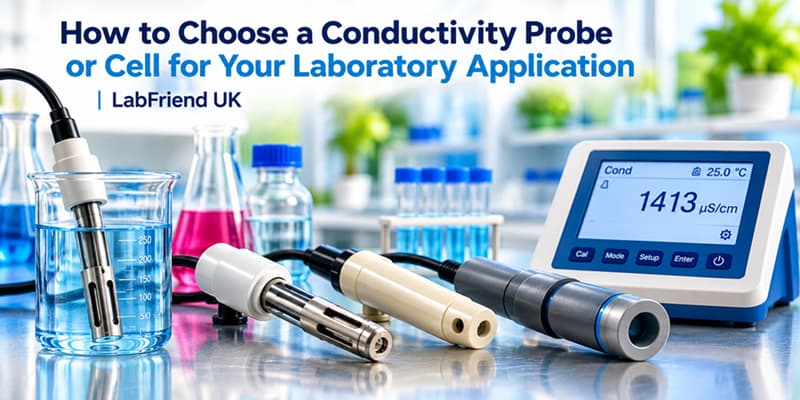
Detailed decisions concerning probe construction, cell
constant and suitability for particular ranges or samples require separate
technical consideration. For the initial system decision, it is enough to
establish that the instrument and sensing component must be considered
together.
Conductivity and temperature
Conductivity is temperature dependent. A laboratory
therefore needs to consider how temperature will be measured, controlled,
compensated for or reported within its particular method.
It is important not to reduce this to a universal
temperature-compensation rule. The appropriate treatment depends on the
measurement method, sample and system being used.
At this stage, the selection requirement is simply to
establish whether the proposed measurement system provides the temperature
measurement and handling capabilities required by the laboratory's method.
Once conductivity is identified as the required parameter,
laboratories can explore laboratory conductivity measurement systems.
When should a laboratory measure dissolved oxygen?
Dissolved oxygen measurement is appropriate when the
concentration of oxygen dissolved in a liquid is relevant to the experiment,
sample, biological system or process.
This makes dissolved oxygen fundamentally different from
both pH and conductivity.
The requirement may arise because oxygen concentration
itself is a parameter of interest, or because changes in dissolved oxygen
provide useful information about what is happening within a monitored system.
Before choosing a dissolved oxygen measurement approach,
define:
- why
dissolved oxygen needs to be measured;
- the
sample and measurement environment;
- expected
measurement conditions;
- sample
temperature;
- salinity
and pressure or barometric-pressure requirements, where relevant to the
method or measurement system;
- required
measurement performance;
- where
measurements will take place;
- how
frequently they will be made;
- calibration
and verification requirements;
- practical
sensor-care and maintenance requirements.
Sensor technology is part of the system decision
Dissolved oxygen measurement can use different sensing
principles, including optical and electrochemical approaches. These
technologies can differ in measurement behaviour, operating requirements and
maintenance characteristics.
That distinction is important at the requirements stage
because sensor technology is not merely an accessory choice made after
selecting the meter.
A full comparison is not necessary at this stage. The
appropriate technology depends on the application's measurement and workflow
requirements and should be considered separately when selecting a dissolved
oxygen system.
For the broad measurement-system decision, the practical
requirement is to ensure that meter, sensor technology, sample conditions and
maintenance expectations are considered together.
Once dissolved oxygen has been identified as the required
parameter, laboratories can explore dissolved oxygen measurement systems.
When might a laboratory need more than one measurement?
pH, conductivity and dissolved oxygen describe different
properties, so a laboratory may legitimately need more than one of them.
The decision should again come from the scientific or
operational requirement.
For example, if a laboratory procedure requires both
acid-base conditions and ionic behaviour to be monitored, pH and conductivity
may both be relevant. If oxygen concentration is also significant to the
process or experiment, dissolved oxygen may form a third independent
measurement requirement.
The presence of several measurement requirements does not
mean that one parameter can be inferred reliably from another.
Instead, ask:
- Which
parameters does the method actually require?
- Will
they normally be measured on the same samples or within the same workflow?
- Are
measurements made in the same location?
- How
frequently is each parameter measured?
- What
measurement performance is required for each?
- What
sensors and calibration or verification procedures are required?
- Would
combining measurements simplify the workflow, or would separate systems
provide practical advantages?
The answers help establish whether a combined measurement
platform deserves consideration.
Dedicated or multiparameter measurement?
A laboratory that routinely needs two or more parameters may
consider a multiparameter measurement system.
This can be attractive where several measurements are part
of the same workflow, particularly if a suitable system supports the required
sensors, measurement ranges and operating conditions.
Where simultaneous measurement is required, confirm that the
proposed system and sensor configuration actually support it rather than
inferring this from the available measurement modes.
It is not automatically the better choice.
Separate dedicated instruments can also be appropriate where
measurements occur in different locations, have different performance or sensor
requirements, need to be available simultaneously, or are controlled through
separate laboratory procedures.
The initial decision can therefore be framed as:
Are these measurements sufficiently connected in the laboratory workflow
for a combined system to be worth considering?

If yes, the laboratory can include multiparameter systems in
its evaluation. If not, dedicated systems may remain the more practical
architecture.
A more detailed comparison may be useful when deciding
between dedicated and multiparameter systems, particularly where sensor
compatibility, calibration burden, maintenance and operational simplicity
differ materially between options.
For laboratories whose requirement genuinely involves a
combination of parameters, multiparameter
measurement systems provide an appropriate category-level starting point.

How to define your measurement-system requirements
Once the required parameter or parameters are established,
the next step is to turn the laboratory need into a broad system specification.
This is deliberately not a detailed procurement
specification. Its purpose is to ensure that the subsequent meter and sensor
selection begins from the application rather than from a product list.
1. Define what is being measured
Start with the parameter:
- pH;
- conductivity;
- dissolved
oxygen; or
- a
defined combination.
Avoid buying a multiparameter instrument merely because it
offers more measurement modes. Additional capability is useful only where the
laboratory needs it.
2. Define the sample
Consider the samples the system will routinely encounter.
Relevant questions include:
- Is
the sample aqueous?
- What
volume is normally available?
- What
measurement range is expected?
- At
what temperature will measurements be made?
- Could
the sample contaminate, foul or otherwise challenge the sensing component?
- Are
there physical constraints on sensor access to the sample?
- Does
the method impose particular sample-handling requirements?
This stage frequently reveals that sensor suitability needs
as much attention as the meter.
3. Define the required measurement performance
The laboratory should establish the performance required by
its method or intended use before comparing instruments.
Depending on the application, relevant specifications may
include measurement range, resolution and documented performance
characteristics of the instrument and complete measurement system, as
applicable. Where accuracy is important, consider the performance of the
complete measurement process rather than treating a meter specification alone
as evidence of the accuracy of the laboratory result.
Do not assume that the highest numerical specification is
automatically necessary or beneficial. The requirement should come from the
method and intended decision.
Product-specific performance should be checked against
current manufacturer documentation rather than inferred from category-level
descriptions.
4. Decide where the measurement will be made
The measurement environment affects the system
configuration.
A benchtop instrument can be appropriate where measurements
are performed at a defined laboratory workstation. A portable system may be
more appropriate where the instrument needs to move between locations or
measurements need to be made away from a fixed bench.
This is not a universal statement that one configuration
provides better measurement performance than the other. Actual performance
depends on the particular instrument and complete measurement system.
The relevant question is:
Where does the measurement need to happen, and what
configuration supports that workflow?
5. Treat the sensor as part of the measurement system
For all three parameters, avoid treating the meter as an
isolated purchase.
The complete arrangement can include:
- instrument;
- electrode,
probe or sensor;
- temperature
measurement where required;
- cables,
connectors or interfaces;
- calibration
or reference materials;
- maintenance
materials;
- appropriate
sample vessels or accessories where relevant to the method.
Not every application requires the same components.
The important control is to confirm system compatibility and
completeness before purchase. Detailed electrode, probe and sensor selection
should be based on the relevant technical requirements and current manufacturer
documentation.
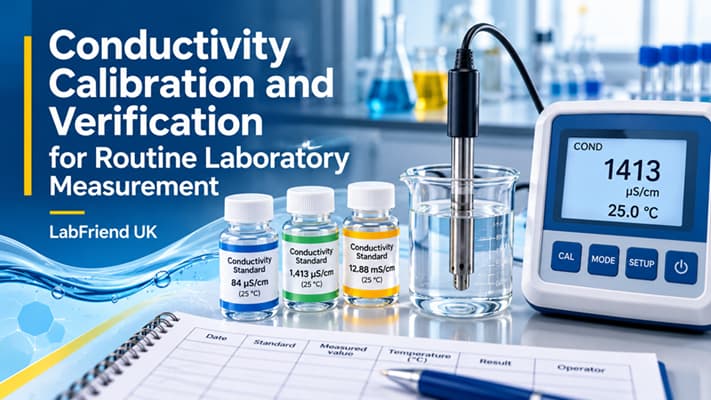
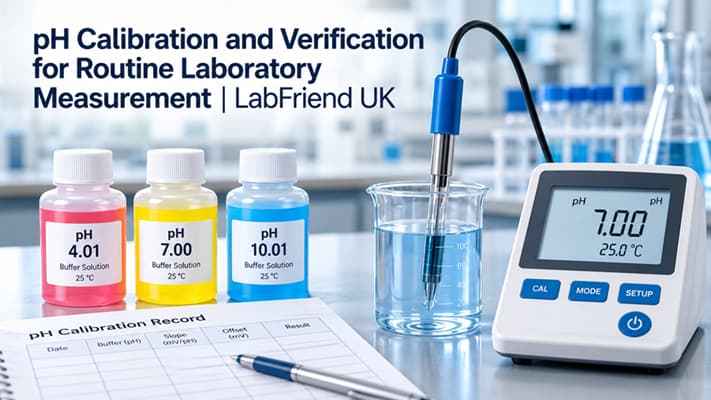
6. Define calibration and verification requirements
Calibration and verification should be considered when
specifying a measurement system because the laboratory needs a practical way to
establish and monitor measurement performance.
The terms should not be collapsed into one another.
At a broad level, calibration establishes the relationship
between measurement-system indications and corresponding values provided by
appropriate references under specified conditions, while verification checks
whether defined requirements or acceptance criteria are satisfied.
Adjustment, where applicable, is a separate action, and
validation is a broader concept that should not be used as a synonym for
routine calibration or verification.
Calibration procedures differ between pH, conductivity and
dissolved oxygen systems, so the laboratory should establish:
- what
calibration or verification its procedure requires;
- what
reference materials or conditions are needed;
- whether
the proposed system supports the required procedure;
- how
results or checks need to be recorded.
7. Consider routine ownership and maintenance
A measurement system must remain workable after
installation.
Before selection, consider who will use it, who will
maintain it, how frequently it will be used and what routine consumables or
replacement components may be required.
This does not require a detailed maintenance plan at this
stage. It simply prevents lifecycle requirements from being discovered only
after purchase.
A practical decision framework
The following framework keeps the decision at the correct
level before specialist product selection begins.
|
Question |
If yes |
Next consideration |
|
Does the laboratory need to measure acidity or alkalinity
in an aqueous system? |
Consider pH measurement |
Define sample, range, performance, location and electrode
requirements |
|
Does it need to assess the electrical conductivity of a
solution? |
Consider conductivity measurement |
Define expected range, sample, temperature and probe/cell
requirements |
|
Does dissolved oxygen concentration matter to the sample
or process? |
Consider dissolved oxygen measurement |
Define sample conditions, performance and sensor-system
requirements |
|
Are two or more parameters routinely required? |
Consider whether a multiparameter system belongs in
the evaluation |
Compare combined and dedicated system architectures |
|
Are measurements made in different locations? |
Consider configuration and portability requirements |
Determine whether fixed, portable or multiple systems
better fit the workflow |
|
Does the sample present unusual physical or chemical
conditions? |
Treat sensor suitability as a specific selection
requirement |
Check the relevant electrode/probe/sensor requirements |
|
Does the method require defined calibration or
verification? |
Include measurement-control capability in the
specification |
Confirm system capability and appropriate reference
requirements |
|
Is a specific performance claim essential? |
Verify it before selection |
Use current manufacturer documentation rather than
category-level assumptions |
The framework intentionally stops before choosing a
particular instrument.
Common mistakes when choosing a measurement approach
Choosing the instrument before defining the measurement
Starting with available meters encourages feature comparison
before the scientific requirement is clear.
Start instead with the parameter and the sample.
Treating pH, conductivity and dissolved oxygen as
interchangeable indicators
They measure different properties. A change in one may occur
alongside a change in another, but that does not make one a substitute for the
other.
Focusing only on the meter
A technically capable instrument can still be unsuitable if
its electrode, cell or sensor does not suit the sample or required measurement
conditions.
Assuming more measurement modes means a better system
A multiparameter instrument is useful only if the combined
capability matches the laboratory's actual workflow. Unused measurement modes
do not improve the underlying measurement.
Ignoring the expected range
The system needs to be suitable for the measurements the
laboratory expects to make. This is particularly important when
sensing-component choice is affected by the measurement range.
Treating temperature as an afterthought
Temperature can affect sensor response, the measured
property itself, or the interpretation and compensation of results, depending
on the parameter and method. The laboratory should understand how its method
handles temperature rather than assuming every instrument or compensation
function behaves identically.
Confusing calibration, verification and adjustment
These are distinct concepts. A laboratory procedure should
use them deliberately rather than treating them as interchangeable labels for
“checking the meter”.
Assuming compatibility
Instrument, sensor, connector and accessory compatibility
should be verified. Where compatibility depends on a particular manufacturer or
model, use the relevant current documentation rather than assuming that
components are interchangeable.
From measurement requirement to product discovery
For a broad selection guide, the commercial next step should
follow the technical decision rather than precede it.
Once the laboratory has established what it needs to
measure, it can explore the corresponding LabFriend UK category:
- laboratory pH measurement systems for pH;
- laboratory conductivity measurement systems for conductivity;
- dissolved oxygen measurement systems for dissolved oxygen; or
- multiparameter measurement systems where a combination of measurements is genuinely
required.
Frequently Asked Questions
Which measurement does my laboratory need: pH,
conductivity or dissolved oxygen?
Choose the parameter that directly addresses the property
your laboratory needs to measure. pH is appropriate when acid-base conditions
matter, conductivity when the electrical conductivity of a solution is
relevant, and dissolved oxygen when oxygen dissolved in the liquid is the
parameter of interest. If the method requires information from more than one of
these properties, the laboratory may need multiple measurements.
Are pH and conductivity the same type of measurement?
No. pH and conductivity measure different properties of a
solution. pH relates to hydrogen ion activity and describes acid-base
conditions, whereas conductivity describes the solution's ability to conduct
electrical current and is influenced by dissolved ions. Both can be useful for
the same sample, but one measurement should not be treated as a substitute for
the other.
Can conductivity tell me which ions are present in a
sample?
Conductivity does not by itself identify which ions are
present in a sample. It measures the solution's overall ability to conduct
electrical current, which is affected by the ionic species present, their
concentrations, temperature and other sample conditions. If individual species
must be identified or quantified, the laboratory needs an analytical approach
appropriate to that separate requirement.
When should a laboratory consider a multiparameter meter?
A multiparameter meter is worth considering when two or more
supported measurements are routinely required within a connected laboratory
workflow. The laboratory should still check whether the system supports the
required sensors, ranges, measurement performance and working conditions.
Separate instruments may be preferable where measurements have substantially
different requirements or need to be performed independently or simultaneously.
Should I choose the meter or the sensor first?
The meter and sensing component should be specified as parts
of the same measurement system. The instrument must provide the required
measurement capability, while the electrode, probe or sensor must suit the
sample and application. In practice, defining the parameter, sample and
measurement requirements first helps prevent either component from being
selected in isolation.
Do all laboratories need benchtop meters?
No. The appropriate configuration depends on where and how
the measurement will be made. Benchtop instruments can suit fixed measurement
stations, while portable systems can suit workflows requiring movement between
locations. The laboratory should compare the actual performance, sensor
compatibility, environmental suitability and workflow requirements of candidate
systems rather than assuming one format is inherently better.
Should calibration requirements be considered before
buying a meter?
Yes. Applicable calibration and verification requirements
should be considered when defining the measurement system because they form
part of measurement control where required by the method or laboratory
procedure. The laboratory should establish what its method requires and confirm
that the proposed system can support the necessary procedure. Detailed
calibration practices differ between pH, conductivity and dissolved oxygen and
should be addressed separately.
Choosing the right approach
The most useful starting point for laboratory measurement is
not a particular meter specification. It is a clear definition of what the
laboratory needs to know about the sample.
Choose pH where acid-base conditions are the required
measurement. Choose conductivity where solution conductivity is relevant.
Choose dissolved oxygen where oxygen dissolved in the liquid matters. Where
several parameters are required, determine whether they form a sufficiently
connected workflow to justify considering a multiparameter system.
Then define the sample, expected range, measurement
performance, location, sensing requirements and routine measurement controls.
That gives the laboratory a defensible measurement-system
requirement and a stronger basis for the instrument and sensor decisions that
follow.
Written by: Donal O’Sullivan, BSc, Co-Founder and Sales Director, LabFriend UK. Donal brings deep chemistry-led technical expertise across analytical chemistry, biochemistry, environmental monitoring, laboratory instrumentation, consumables and scientific product selection.
Reviewed by: Michael Anderson, MBA, Founder and Managing Director, LabFriend UK. Michael reviews LabFriend UK content for customer relevance, commercial accuracy, operational practicality and alignment with LabFriend UK’s laboratory supply model.
Frequently asked questions
Delivery times vary by product and supplier. Each product page shows current stock levels and the expected lead time, and we confirm this when you place your order. Most items arrive within 2 to 3 weeks. Specialised items can take longer if they are not in stock. If you need something by a certain date, contact us and we’ll check for you.
Yes. Register for a commercial account and, once it’s approved, you will be able to process orders via PO Once you have a commercial account, you can directly email your purchase orders
Add products to your cart and click Get a Quote. You’ll get a formal quote instantly, ready to send to your email address. For bulk orders or custom requirements, send us your product list and we’ll reply with itemized pricing.
If your item is faulty, not as described or sent in error, let us know within 14 days of delivery and we’ll arrange a return. Change of mind returns are only accepted if the item is unused and in its original packaging. A restocking fee will apply and you pay the return freight. Read our full Returns Policy for details.
Yes, prices are shown including GST by default. Use the Prices Inc. GST toggle at the top of the page to view prices without GST.