
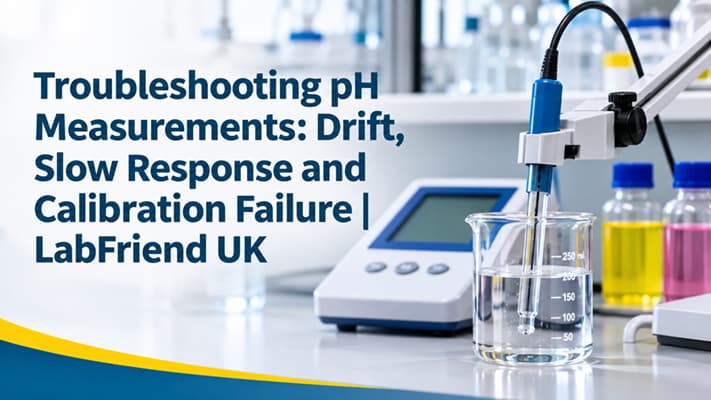
27 mins read
Troubleshooting pH Measurements: Drift, Slow Response and Calibration Failure
Troubleshooting pH Measurements: Drift, Slow Response and Calibration Failure
Max. measured value
Measured range
Min. measured value
Specifications
Compare models£132.04
Inc. VAT
The Ludwig Schneider Density Hydrometer is designed for precise density measurements in the range of 1.020 to 1.220 g/cm³, with a resolution of 0.002 g/cm³. This hydrometer features a total length of 300 mm and is made from durable plastic, ensuring long-lasting performance. With an error limit of ±0.002 g/cm³ at 20°C, it is ideal for laboratory and industrial applications where high accuracy is required. The hydrometer is also calibratable for enhanced measurement reliability.
Manufactured by Ludwig Schneider, this hydrometer offers precision and reliability for a wide range of professional applications, ensuring accurate density measurement every time.

£132.04
Inc. VAT
Manufacturer P/N
3001220-R1
Part Number
4.680 465
Manufacturer
Ludwig Schneider
Max. measured value
1.220 g/cm³

£132.04
Inc. VAT
Manufacturer P/N
3001420
Part Number
9.236 841
Manufacturer
Ludwig Schneider
Max. measured value
1.420 g/cm³

£132.04
Inc. VAT
Manufacturer P/N
3001620
Part Number
9.236 842
Manufacturer
Ludwig Schneider
Max. measured value
1.620 g/cm³
It is designed for precise density measurements in the range of 1.020 to 1.220 g/cm³, with a resolution of 0.002 g/cm³. This hydrometer features a total length of 300 mm and is made from durable plastic, ensuring long-lasting performance. With an error limit of ±0.002 g/cm³ at 20°C, it is ideal for laboratory and industrial applications where high accuracy is required. The hydrometer is also calibratable for enhanced measurement reliability.
Yes. It is designed for laboratory and industrial density measurements, and offers a measurement range of 1.020 to 1.220 g/cm³ and a resolution of 0.002 g/cm³ to support this kind of work.
It has a measurement range of 1.020 to 1.220 g/cm³, a resolution of 0.002 g/cm³ and a length of 300 mm.
It is made from plastic construction for durability. It also offers calibratable for improved accuracy, breakage protected (no glass breakage) and fully made of resistant polycarbonate (PC).
27 mins read
Troubleshooting pH Measurements: Drift, Slow Response and Calibration Failure
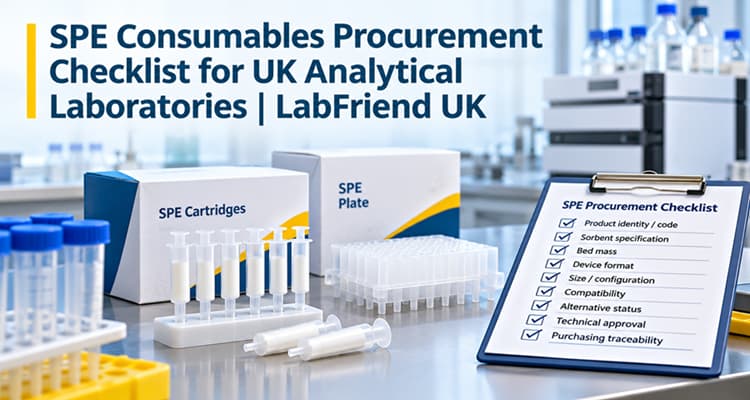
19 mins read
SPE Consumables Procurement Checklist for UK Analytical Laboratories
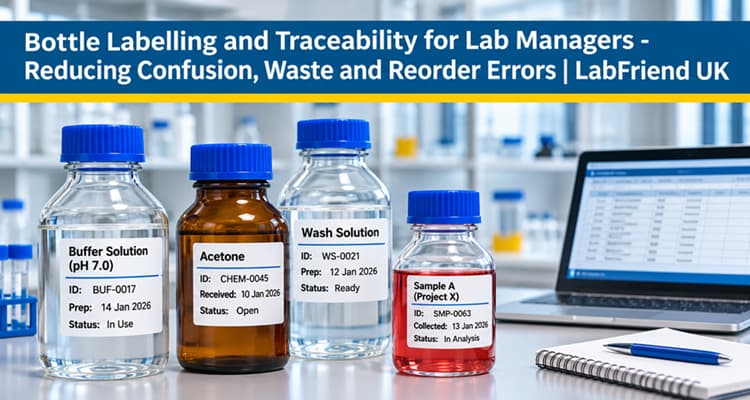
24 mins read
Bottle Labelling and Traceability for Lab Managers - Reducing Confusion, Waste and Reorder Errors
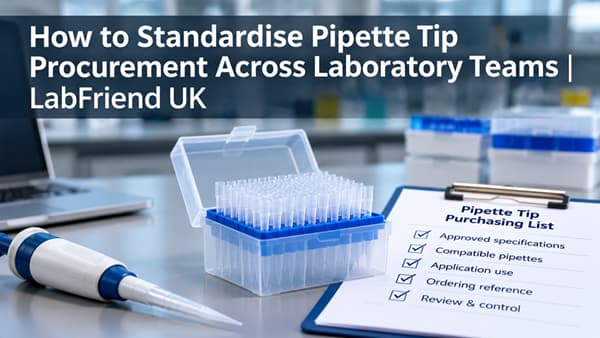
21 mins read
How to Standardise Pipette Tip Procurement Across Laboratory Teams
33 mins read
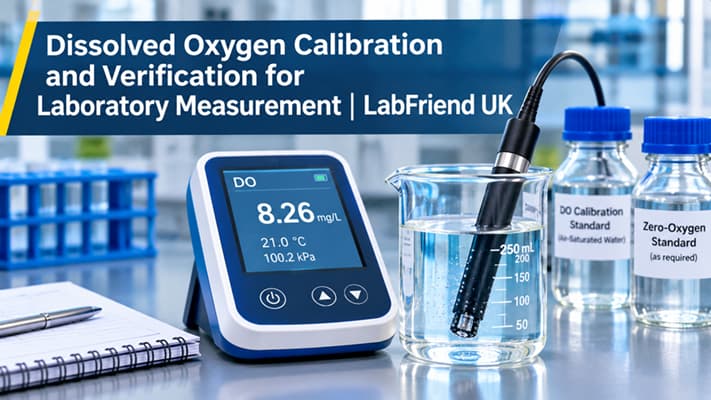
Dissolved Oxygen Calibration and Verification for Laboratory Measurement