

33 mins read
The Complete Guide to Laboratory Gloves for UK Laboratories
The Complete Guide to Laboratory Gloves for UK Laboratories
Ext. Ø
Int. Ø
Specifications
Compare models£23.23
Inc. VAT
The LLG Labware PharMed Tubing is specifically designed for the uniPERISTALTICPUMP 3, featuring an inner diameter (ID) of 4.8 mm and an outer diameter (OD) of 8.0 mm. This high-quality tubing ensures optimal performance and durability for peristaltic pumping applications in laboratory settings.
Ensure the reliability and efficiency of your peristaltic pumping system with the LLG Labware PharMed Tubing, a trusted solution for laboratory fluid handling applications.

£23.23
Inc. VAT
Manufacturer P/N
6263553
Part Number
6.263 553
Manufacturer
LLG Labware
Ext. Ø
8 mm

£23.23
Inc. VAT
Manufacturer P/N
6263554
Part Number
6.263 554
Manufacturer
LLG Labware
Ext. Ø
9.6 mm

£15.63
Inc. VAT
Manufacturer P/N
6263552
Part Number
6.263 552
Manufacturer
LLG Labware
Ext. Ø
6.3 mm
It is specifically designed for the uniPERISTALTICPUMP 3, featuring an inner diameter (ID) of 4.8 mm and an outer diameter (OD) of 8.0 mm. This high-quality tubing ensures optimal performance and durability for peristaltic pumping applications in laboratory settings.
Yes. It is designed for the uniPERISTALTICPUMP 3, featuring an inner diameter (ID) of 4, and offers inner Diameter (ID): 4.8 mm; Outer Diameter (OD): 8.0 mm and connector and Tube Clip for secure attachment to support this kind of work.
It has inner Diameter (ID): 4.8 mm; Outer Diameter (OD): 8.0 mm, connector and Tube Clip for secure attachment and sold individually.
It is made from pharMed tubing for enhanced chemical resistance and durability. It is compatible with the uniPERISTALTICPUMP 3. It also offers in stock; ships within 2-4 weeks.
33 mins read
The Complete Guide to Laboratory Gloves for UK Laboratories

21 mins read
Switching Pipette Tip Suppliers Without Disrupting Laboratory Workflows
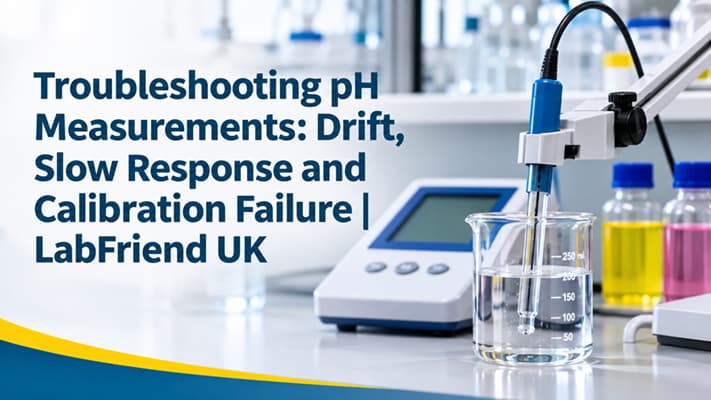
27 mins read
Troubleshooting pH Measurements: Drift, Slow Response and Calibration Failure
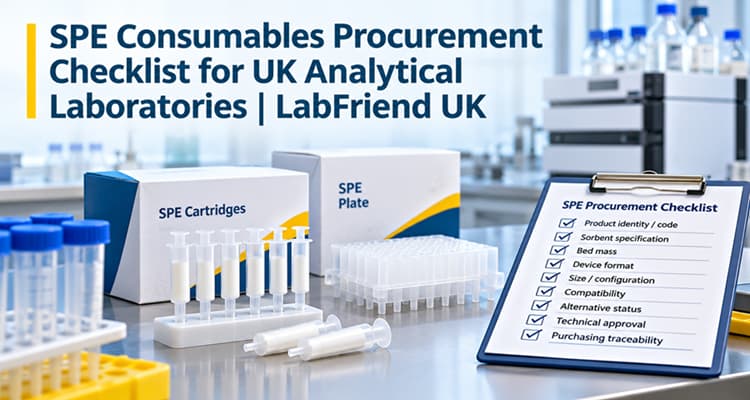
19 mins read
SPE Consumables Procurement Checklist for UK Analytical Laboratories
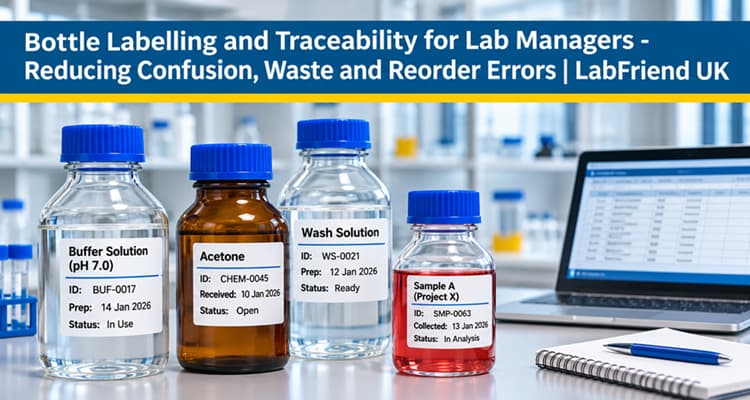
24 mins read
Bottle Labelling and Traceability for Lab Managers - Reducing Confusion, Waste and Reorder Errors