


20 mins read
Troubleshooting Conductivity Measurements: Unstable, Incorrect and Failed Readings
Troubleshooting Conductivity Measurements: Unstable, Incorrect and Failed Readings
Connection plug
Type
Specifications
Compare models£322.08
Inc. VAT
The Xylem WTW IDS Redox Electrode SenTix ORP-T 900 is a high-quality electrode designed for accurate measurement of oxidation-reduction potential (ORP). Featuring advanced intelligent digital sensor (IDS) technology, this electrode ensures precise and reliable results in a variety of applications, from laboratory analysis to industrial water testing.
This electrode is an essential tool for professionals who require high-precision ORP measurements for their research, water treatment, or industrial applications.

Manufacturer P/N
103791
Part Number
6.267 995
Manufacturer
Xylem WTW
Cable length
1.5 m

Manufacturer P/N
103763
Part Number
7.644 433
Manufacturer
Xylem WTW
Cable length
-
It is a high-quality electrode designed for accurate measurement of oxidation-reduction potential (ORP). Featuring advanced intelligent digital sensor (IDS) technology, this electrode ensures precise and reliable results in a variety of applications, from laboratory analysis to industrial water testing.
Yes. It is designed for accurate measurement of oxidation-reduction potential (ORP), and offers intelligent digital sensor (IDS) for enhanced accuracy and ideal for accurate ORP measurements to support this kind of work.
It has intelligent digital sensor (IDS) for enhanced accuracy, ideal for accurate ORP measurements and built for long-lasting performance in demanding environments.
It is compatible with iDS-enabled devices.
20 mins read
Troubleshooting Conductivity Measurements: Unstable, Incorrect and Failed Readings
24 mins read
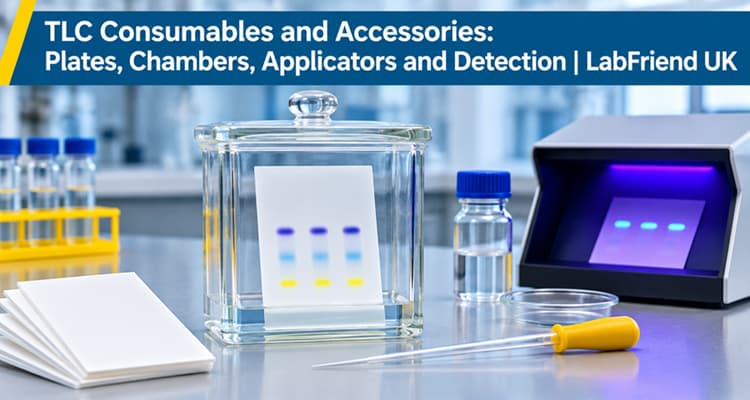
TLC Consumables and Accessories: Plates, Chambers, Applicators and Detection

23 mins read
How Lab Managers Can Standardise Laboratory Bottle Purchasing

33 mins read
The Complete Guide to Laboratory Gloves for UK Laboratories

21 mins read
Switching Pipette Tip Suppliers Without Disrupting Laboratory Workflows