

19 mins read
SPE Consumables Procurement Checklist for UK Analytical Laboratories
SPE Consumables Procurement Checklist for UK Analytical Laboratories
Specifications
£9,482.88
Inc. VAT
The Julabo Immersion Cooler FT900 Temperature Range -90°C To +30°C is designed for rapid and reliable cooling applications in laboratory and industrial environments. With an extensive temperature range from -90°C to +30°C, this immersion cooler provides efficient cooling performance for temperature-sensitive processes, sample preparation, and research applications requiring precise temperature control.
This Julabo FT900 immersion cooler is suitable for laboratories requiring ultra-low temperature cooling and dependable temperature control across a wide operating range.
It is designed for rapid and reliable cooling applications in laboratory and industrial environments. With an extensive temperature range from -90°C to +30°C, this immersion cooler provides efficient cooling performance for temperature-sensitive processes, sample preparation, and research applications requiring precise temperature control.
Yes. It is designed for temperature control, sample cooling, and research processes, and offers -90°C to +30°C and rapid and efficient cooling for laboratory applications to support this kind of work.
It has -90°C to +30°C and rapid and efficient cooling for laboratory applications.
It offers the following key features: Immersion cooler; -90°C to +30°C; Provides rapid and efficient cooling for laboratory applications; Suitable for temperature control, sample cooling, and research processes.
19 mins read
SPE Consumables Procurement Checklist for UK Analytical Laboratories
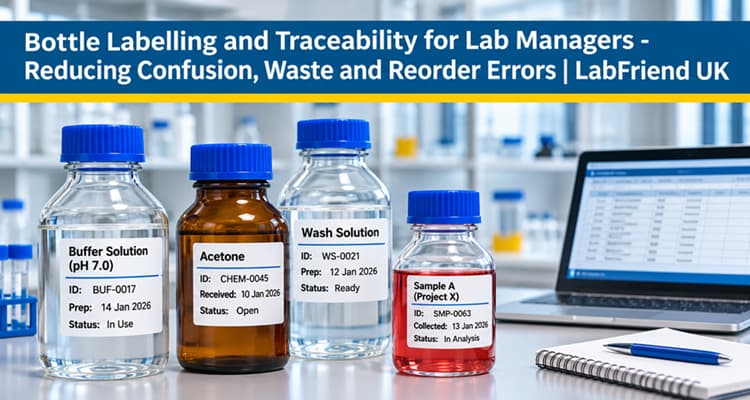
24 mins read
Bottle Labelling and Traceability for Lab Managers - Reducing Confusion, Waste and Reorder Errors

21 mins read
How to Standardise Pipette Tip Procurement Across Laboratory Teams
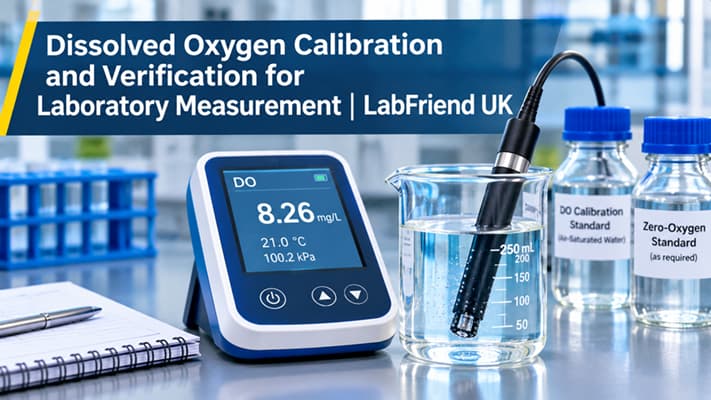
33 mins read
Dissolved Oxygen Calibration and Verification for Laboratory Measurement
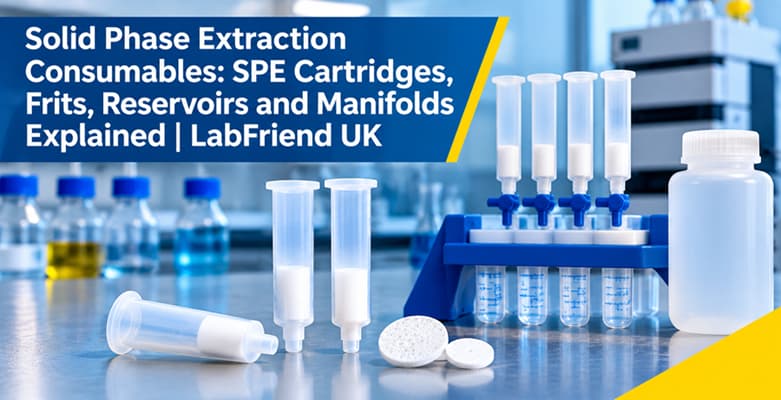
27 mins read
Solid Phase Extraction Consumables: SPE Cartridges, Frits, Reservoirs and Manifolds Explained