

20 mins read
Troubleshooting Conductivity Measurements: Unstable, Incorrect and Failed Readings
Troubleshooting Conductivity Measurements: Unstable, Incorrect and Failed Readings
Angle
Specifications
Compare models£21.86
Inc. VAT
The ISOLAB Adapter for Distillation Cone NS 29/32 Plane Bend 75° Boro 3.3 is designed for seamless integration in laboratory distillation systems. Manufactured from high-quality Boro 3.3 glass, this adapter offers excellent resistance to thermal shock and chemical corrosion. It features a plane bend design, making it ideal for precise and efficient distillation processes in laboratories.
This adapter is a key component for laboratories requiring efficient and reliable distillation systems, ensuring optimal performance and durability.

Manufacturer P/N
065.37.029
Part Number
9.012 654
Manufacturer
ISOLAB
Angle
75 °

Manufacturer P/N
065.38.029
Part Number
9.012 656
Manufacturer
ISOLAB
Angle
90 °
It is designed for seamless integration in laboratory distillation systems. Manufactured from high-quality Boro 3.3 glass, this adapter offers excellent resistance to thermal shock and chemical corrosion. It features a plane bend design, making it ideal for precise and efficient distillation processes in laboratories.
Yes. It is designed for laboratory distillation and chemical processing, and offers plane bend design for easy integration into distillation setups to support this kind of work.
It has plane bend design for easy integration into distillation setups.
It is made from high-quality Boro 3.3 glass for thermal shock resistance and durability. It is compatible with distillation systems with NS 29/32 connectors.
20 mins read
Troubleshooting Conductivity Measurements: Unstable, Incorrect and Failed Readings
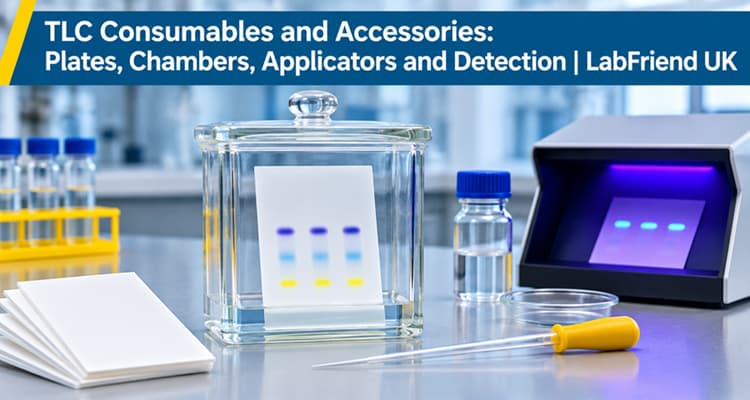
24 mins read
TLC Consumables and Accessories: Plates, Chambers, Applicators and Detection

23 mins read
How Lab Managers Can Standardise Laboratory Bottle Purchasing

33 mins read
The Complete Guide to Laboratory Gloves for UK Laboratories
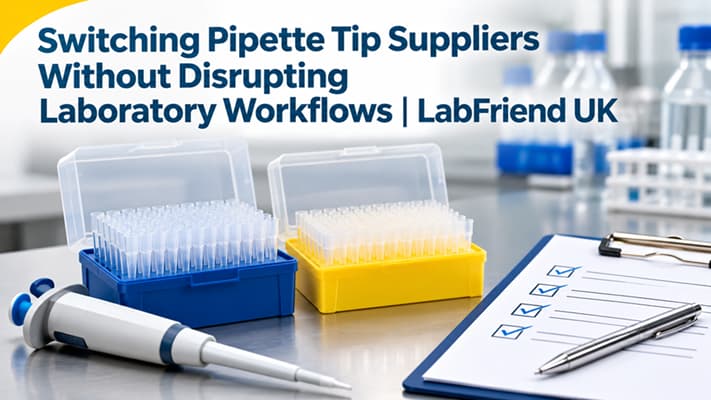
21 mins read
Switching Pipette Tip Suppliers Without Disrupting Laboratory Workflows