


20 mins read
Troubleshooting Conductivity Measurements: Unstable, Incorrect and Failed Readings
Troubleshooting Conductivity Measurements: Unstable, Incorrect and Failed Readings
Specifications
£1,411.87
Inc. VAT
The Xylem WTW pH/Cond 3320 Conductivity Meter is a versatile dual-channel meter designed for accurate pH and conductivity measurements. Equipped with a built-in data logger and USB interface, this device ensures efficient data management and transfer. Its rugged design and backlit display make it suitable for both laboratory and field use, supporting reliable measurements across various applications.
Scope of Supply:
This meter is the ideal solution for professionals who need accurate, portable, and digitally integrated pH and conductivity measurement in one robust device.
Conductivity cell probes TetraCon® 325, sensor head made of POM
It is a versatile dual-channel meter designed for accurate pH and conductivity measurements. Equipped with a built-in data logger and USB interface, this device ensures efficient data management and transfer. Its rugged design and backlit display make it suitable for both laboratory and field use, supporting reliable measurements across various applications.
Yes. It is designed for fieldwork, research, and routine lab analysis, and offers pH/Conductivity Meter with dual channels and USB connectivity for data transfer to support this kind of work.
It has pH/Conductivity Meter with dual channels, USB connectivity for data transfer and built-in data logger for secure measurement tracking.
It offers backlit LCD for optimal readability in all lighting conditions, meter in transport case, manual and CD-ROM.
20 mins read
Troubleshooting Conductivity Measurements: Unstable, Incorrect and Failed Readings
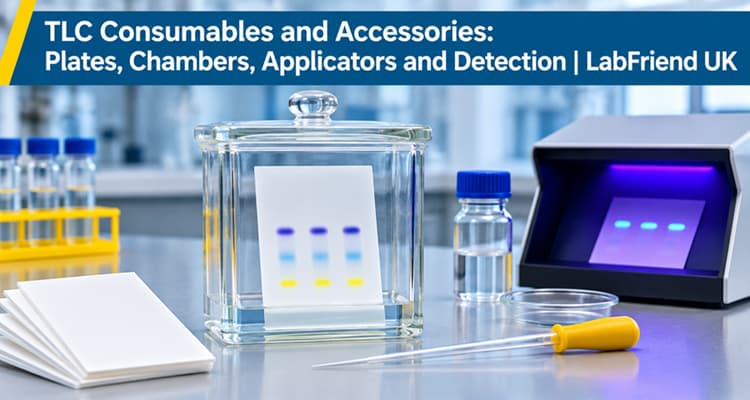
24 mins read
TLC Consumables and Accessories: Plates, Chambers, Applicators and Detection

23 mins read
How Lab Managers Can Standardise Laboratory Bottle Purchasing

33 mins read
The Complete Guide to Laboratory Gloves for UK Laboratories
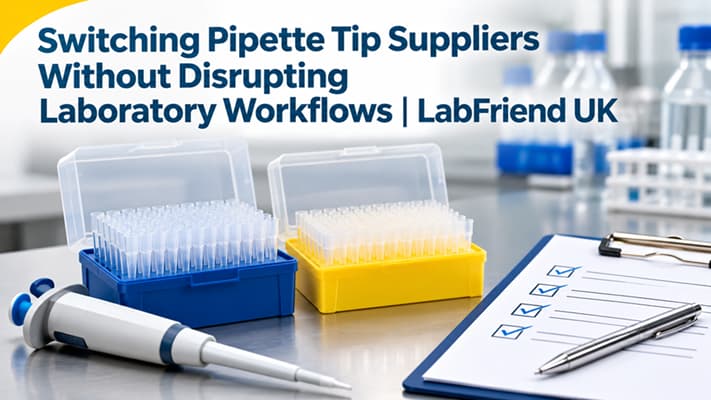
21 mins read
Switching Pipette Tip Suppliers Without Disrupting Laboratory Workflows