


20 mins read
Troubleshooting Conductivity Measurements: Unstable, Incorrect and Failed Readings
Troubleshooting Conductivity Measurements: Unstable, Incorrect and Failed Readings
Specifications
£1,992.67
Inc. VAT
The Xylem WTW InoLab Cond 7310 Set 1 is a high-precision benchtop conductivity meter designed for laboratory applications requiring accurate measurements and comprehensive documentation. This set includes the InoLab Cond 7310 meter, the TetraCon 325 four-electrode conductivity cell, and all necessary accessories for immediate use.
This conductivity meter set is perfect for laboratories requiring precise conductivity measurements with reliable data documentation.
Conductivity cell probes TetraCon® 325, sensor head made of POM
It is a high-precision benchtop conductivity meter designed for laboratory applications requiring accurate measurements and comprehensive documentation. This set includes the InoLab Cond 7310 meter, the TetraCon 325 four-electrode conductivity cell, and all necessary accessories for immediate use.
Yes. It is designed for water and wastewater analysis, environmental monitoring, and research laboratories, and offers a conductivity range of 0.001 µS/cm to 1000 mS/cm and a salinity range of 0.0 to 70.0 ppt to support this kind of work.
It has a conductivity range of 0.001 µS/cm to 1000 mS/cm, a salinity range of 0.0 to 70.0 ppt and a specific resistance of 0.00 to 199 MΩ·cm.
It offers the following key features: conductivity, Salinity, Specific Resistance, Total Dissolved Solids (TDS), Temperature, -5.0 to 105.0 °C, nLF, linear 0.000 to 10.000%, can be switched off and backlit graphic LCD with plain text menus.
20 mins read
Troubleshooting Conductivity Measurements: Unstable, Incorrect and Failed Readings
24 mins read
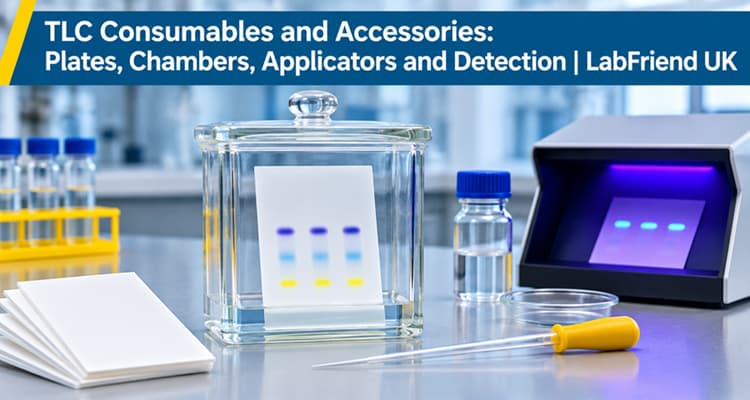
TLC Consumables and Accessories: Plates, Chambers, Applicators and Detection

23 mins read
How Lab Managers Can Standardise Laboratory Bottle Purchasing

33 mins read
The Complete Guide to Laboratory Gloves for UK Laboratories
21 mins read
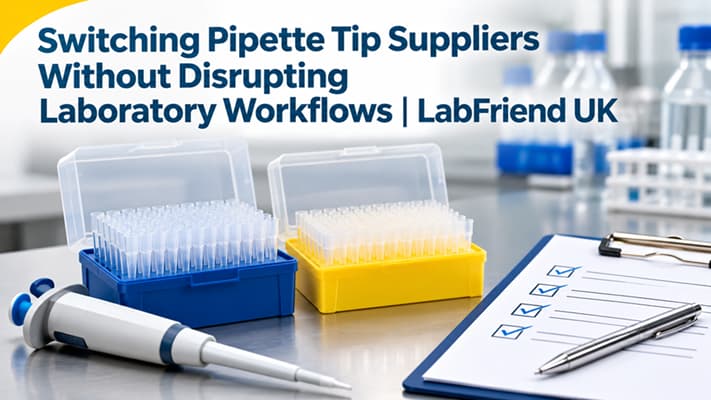
Switching Pipette Tip Suppliers Without Disrupting Laboratory Workflows